Grill Steak: A Bold Sans Serif for Modern Embroidery
As a designer who spends more time staring at stitch simulations than actual fabric sometimes, I am always on the lookout for typography that translates well from screen to thread. Typography in embroidery is a different beast entirely; what looks crisp on a monitor can turn into a muddy mess under the needle if the letterforms aren't robust enough. Recently, I took a close look at Grill Steak, a cute sans serif font that claims versatility across stickers, planners, and apparel. My goal was simple: determine if this typeface holds up as a professional machine embroidery design for client work and small business products.
First Impressions: Playful Yet Structured
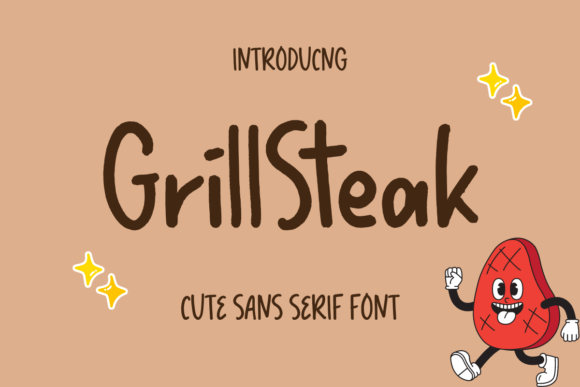
The first thing you notice about Grill Steak is its personality. Despite being categorized under Fonts and specifically as a Sans Serif, it carries a distinct warmth. It isn't sterile or overly geometric like many modern sans serifs used in corporate branding. Instead, it has a slightly rounded, approachable feel that screams "handmade" without looking amateurish. For an embroidery project, this is crucial. The shapes are open enough to allow for clean fill stitch coverage, yet the strokes appear substantial enough to support a satin stitch outline if one chooses to add definition.
The visual mood is undeniably cheerful. It feels at home on a nursery wall or a child's backpack, but it lacks the childish exaggeration that would prevent it from being used on adult apparel. This balance makes it a strong candidate for a wide range of design assets. When I visualized this as a digital embroidery file, I could immediately see how the clean lines would minimize thread breaks and reduce the need for excessive trimming, which is a major plus for production efficiency.
Real-World Application: The Tote Bag Test
To truly evaluate Grill Steak, I imagined a specific real-life scenario: a custom order for a local coffee shop needing branded tote bag design options. The client wanted something friendly but legible from a distance. In this context, Grill Steak shines. The weight of the letters suggests that when digitized properly, it would sit beautifully on canvas or heavy cotton twill.
Imagine stitching this onto a natural-colored tote. The simplicity of the Sans Serif structure means you aren't fighting with tiny internal details that often get lost in the texture of woven fabric. If I were producing this as a handmade product for an Etsy seller inventory, I would likely pair it with a high-contrast thread colors scheme—perhaps a deep charcoal on cream or a vibrant mustard on navy. The font's inherent cuteness adds a boutique touch that elevates a simple bag into a lifestyle accessory. It creates a finished product that feels thoughtful and curated, rather than mass-produced.
Beyond totes, this font is equally compelling for sweatshirt embroidery. On fleece or French terry, where fabric texture can swallow thin lines, the sturdy build of Grill Steak ensures readability. It would make an excellent choice for custom apparel lines focusing on comfort wear, where the design needs to look soft and inviting rather than sharp and aggressive.
Navigating Technical Challenges
However, no font is perfect for every situation, and a responsible reviewer must point out where caution is needed. While Grill Steak is versatile, its application requires careful consideration of stitch density and hoop size. Because it is a "cute" font, there may be rounded terminals or specific stylistic quirks that, if scaled down too small for a baby embroidery project like a onesie, could result in puckering or loss of detail.
If you are planning to use this on stretchy fabrics, such as performance tees or knit caps, you must ensure your digitizing includes appropriate pull compensation. The open counters (the empty spaces inside letters like 'o' or 'e') need to be wide enough to remain clear after the fabric relaxes. Furthermore, on dark fabrics, a solid fill might require a dense underlay, which can stiffen the hand of the garment. For items like aprons or kitchen towels that undergo frequent washing, testing the durability of the stitch count is essential. You do not want the charm of the font to be compromised by thread fatigue after the first wash cycle.
Curved surfaces present another hurdle. If you intend to use Grill Steak for an embroidered patch or directly on a structured cap, the layout must account for the curvature. Long phrases in this font might distort if not arched correctly. It is best suited for short, punchy quotes or single words where the impact is immediate and the layout remains relatively flat.
Commercial Viability and Brand Trust
For craft business owners and creative entrepreneurs, the choice of typography directly influences perceived value. Grill Steak offers a level of professionalism that builds customer trust. It signals that the maker cares about aesthetics and legibility. When a customer sees a clean, well-executed sans serif on a personalized gift, they associate that quality with the brand itself. This font supports brand consistency across various small shop product lines, from holiday embroidery ornaments to year-round home decor.
Using Grill Steak in your printable mockup previews can also boost buyer engagement. Its friendly nature invites clicks and saves, particularly in niches like teacher gifts, party favors, or nursery decor. However, before listing any commercial embroidery items, you must verify the licensing terms associated with the font file. Just because a font is available for download does not automatically grant rights for commercial resale of physical goods or digital files. Always confirm whether the license covers applique design usage or if it is restricted to personal crafting.
Practical Notes for the Studio
Before committing to a full production run with Grill Steak, I recommend the following steps to ensure success:
- Test on Scrap Fabric: Always stitch a sample on the exact material you plan to sell. Check how the running stitch outlines (if used) interact with the weave.
- Check Contrast: View your design in black and white to ensure the letterforms stand out without relying solely on color.
- Review Density: Ensure the stitch density isn't so high that it causes the fabric to pucker, especially on lighter weights.
- Verify Hoop Limits: Confirm that your intended phrase fits within your machine's hoop size without needing to re-hoop, which can lead to alignment issues.
- Inspect Small Details: Zoom in on the digitized file to check for tiny jumps or trims that could affect the finished product quality.
- Stabilizer Selection: Choose a stabilizer that matches the fabric weight; cut-away is often safer for garments that will be washed often.
In conclusion, Grill Steak is a promising contender for the modern embroiderer's library. It bridges the gap between playful creativity and functional design. Whether you are creating a wedding gift, stocking up for a craft fair, or expanding your Etsy listings, this font provides a solid foundation. With proper digitizing and material selection, it can transform simple textiles into cherished, professional-grade items. Just remember to respect the technical limitations of embroidery and always prioritize a test stitch before facing the customer.