Reviewing the AMAL Arabic Calligraphy Vector for Embroidery
As a designer who spends more time staring at stitch simulations than I do sleeping, I am always skeptical of "high quality" vector claims until I see how they translate into thread. When I first opened the Name Arabic Calligraphy Vector, AMAL, my immediate reaction wasn't just about the aesthetic; it was about feasibility. In the world of Crafts and Graphics, there is often a disconnect between a crisp SVG on a screen and a tangible finished product. This review breaks down how this specific design holds up when you move from digital asset to actual needlework.
The Visual Personality of AMAL
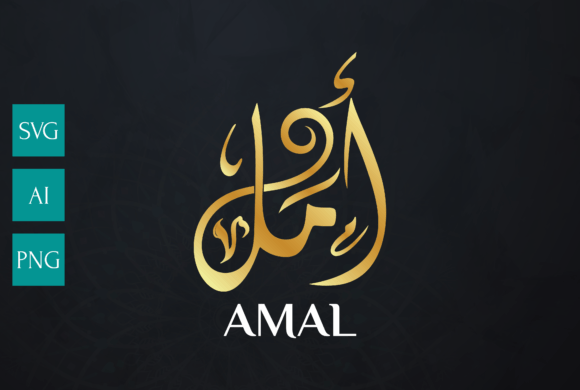
The name "Amal" means hope in Arabic, and the calligraphic flow of this design captures that sentiment beautifully. The lines are fluid, avoiding the jagged edges that often plague automated digitizing. For an embroidery project, this is crucial. The visual personality here is elegant yet bold, making it versatile enough for both modern minimalist decor and traditional cultural pieces. The layout feels balanced, with the letters interlocking in a way that suggests unity. However, as a reviewer, I look past the beauty to the mechanics. The curves are smooth, which is excellent for satin stitch execution, but the density of the overlapping strokes requires careful attention during the digitizing phase if you are converting this vector yourself.
Real-World Application: The Custom Tote Bag Scenario
To truly test the Name Arabic Calligraphy Vector, AMAL, I envisioned a real-life scenario: a custom order for a boutique client wanting personalized tote bags for a cultural heritage event. Tote bags are notorious for having a loose weave, which can be a nightmare for detailed lettering. Here, the design shines because of its strong silhouette. Unlike fonts with excessive internal detailing that get lost in canvas texture, AMAL maintains its integrity.
If I were stitching this onto a heavy cotton tote, I would lean towards a fill stitch for the body of the letters to ensure coverage, perhaps outlining with a subtle running stitch to define the edges against the fabric texture. The result would be a handmade product that feels premium. Customers reacting to this would likely appreciate the cultural authenticity combined with professional execution. It elevates a simple bag into a statement piece, perfect for an Etsy seller looking to differentiate their small shop product from mass-produced imports.
Ideal Surfaces and Products
This design is not a one-trick pony. Its adaptability makes it a strong candidate for various commercial embroidery projects. Consider these applications:
- Sweatshirt Embroidery: The bold lines of AMAL work exceptionally well on fleece or French terry. The texture of the fabric adds depth to the calligraphy without obscuring the design.
- Baby Embroidery: For a nursery name sign or a personalized onesie, the soft curves feel gentle and welcoming. However, scale is key here; ensure the design is large enough to prevent stitch pull on small garments.
- Embroidered Patch: Creating a merit badge or fashion patch with this vector allows for a clean merrowed edge. The compact nature of the word "Amal" fits perfectly within circular or shield-shaped hoop constraints.
- Holiday Embroidery: Imagine this stitched in gold thread on a deep velvet pillow cover for Eid or Ramadan decor. The contrast creates a luxurious look that boosts product value.
Technical Challenges and Fabric Considerations
While the Name Arabic Calligraphy Vector, AMAL is visually stunning, it demands respect regarding fabric choice. If you attempt to stitch this on a thin, stretchy fabric like jersey without proper stabilization, you risk distortion. The interconnected nature of Arabic calligraphy means that if one part shifts, the whole word loses its legibility.
For dark fabric, you must ensure your thread colors have high contrast. A metallic gold or bright white works best, but be wary of stitch density. If the digitized file is too dense, the fabric may pucker, especially on caps or curved surfaces. Speaking of caps, this design could work on the front panel, but you must verify the hoop size compatibility. The horizontal flow of the calligraphy might conflict with the curved brim area, so centering it high on the crown is safer.
Furthermore, for items that need frequent washing, like kitchen towels or aprons, the underlay stitches are critical. Without a solid foundation, the satin columns of the letters may gap over time. I strongly advise testing the design on scrap fabric first to gauge how the stabilizer interacts with your specific material.
Enhancing Brand Consistency and Trust
For creative entrepreneurs, consistency is currency. Using a high-quality vector like AMAL ensures that your printable mockup matches the final stitched item. Nothing erodes customer trust faster than a listing photo that looks sharp while the delivered item looks muddy. Because this design comes in formats like SVG, PNG, and AI, it serves as a robust design asset for your marketing materials as well as your production line. Whether you are selling a personalized gift or building a brand around Islamic art, the professionalism of the typography reflects directly on your business reputation.
Practical Notes for the Designer
Before you commit to a production run, here are my professional recommendations for working with this file:
- Check Licensing: Always confirm the license terms before selling finished items or digital products. Some vectors are for personal use only, while others allow commercial application.
- Digitizing Verification: If you are converting the SVG to an embroidery file yourself, pay close attention to the entry and exit points of the needle to minimize jumps and trims.
- Contrast Testing: View the design in black and white mockups to ensure the shape reads clearly without relying on color.
- Stabilizer Selection: For textured fabrics, use a cut-away stabilizer to provide permanent support. For woven fabrics like linen, a tear-away might suffice, but test first.
- Scale Appropriately: Do not shrink this design too small. Fine details in calligraphy can vanish if the hoop size forces the design below a certain millimeter threshold.
In conclusion, the Name Arabic Calligraphy Vector, AMAL is a potent tool for the modern maker. It bridges the gap between traditional artistry and modern manufacturing. While it requires a thoughtful approach to fabric and stabilization, the resulting custom apparel and decor items possess a level of sophistication that resonates with buyers. It is not just a graphic; it is a foundation for creating meaningful, high-value goods.